

Repair or Replace? When a Commercial Door Is Worth Fixing
Quick Answer: Repair a commercial door when the problem is isolated, the door is sound and not too old, and the fix restores safe, reliable operation — a broken spring, worn rollers, a damaged section, or a bad opener are usually worth repairing. Lean toward replacement when the door is old and failing repeatedly, when repairs are stacking up, when it can't meet your cycle or safety needs, or when damage is structural. The deciding factors are the door's age and condition, how often it's failing, the safety of continued use, and the cost of downtime each failure causes your operation.
A commercial door that's down again raises a question every facility manager eventually faces: keep fixing it, or replace it? It's tempting to just patch whatever broke and move on, but a door that keeps failing quietly drains money and risks a shutdown at the worst time. The right call isn't about any single repair — it's about the pattern, and a few clear factors make the decision much easier than it feels in the moment.
Repair and Replace Aren't About One Breakdown
The instinct after a failure is to ask, "Can this be fixed?" — and almost anything can be. The better question is whether fixing it makes sense given the whole picture: how old the door is, how often it fails, whether it can still operate safely, and what each breakdown costs you in lost work. A single broken part on an otherwise solid door is an easy repair. The same part on a door that's failed three times this year is a different decision entirely. Step back from the immediate break and look at the trend.
When Repair Is the Right Call
Repair usually wins when the door itself is fundamentally sound, and the problem is specific and fixable. A door that's reasonably aged, structurally intact, and suffering an isolated failure is worth repairing — you're restoring a good door to service, not pouring money into a lost cause.
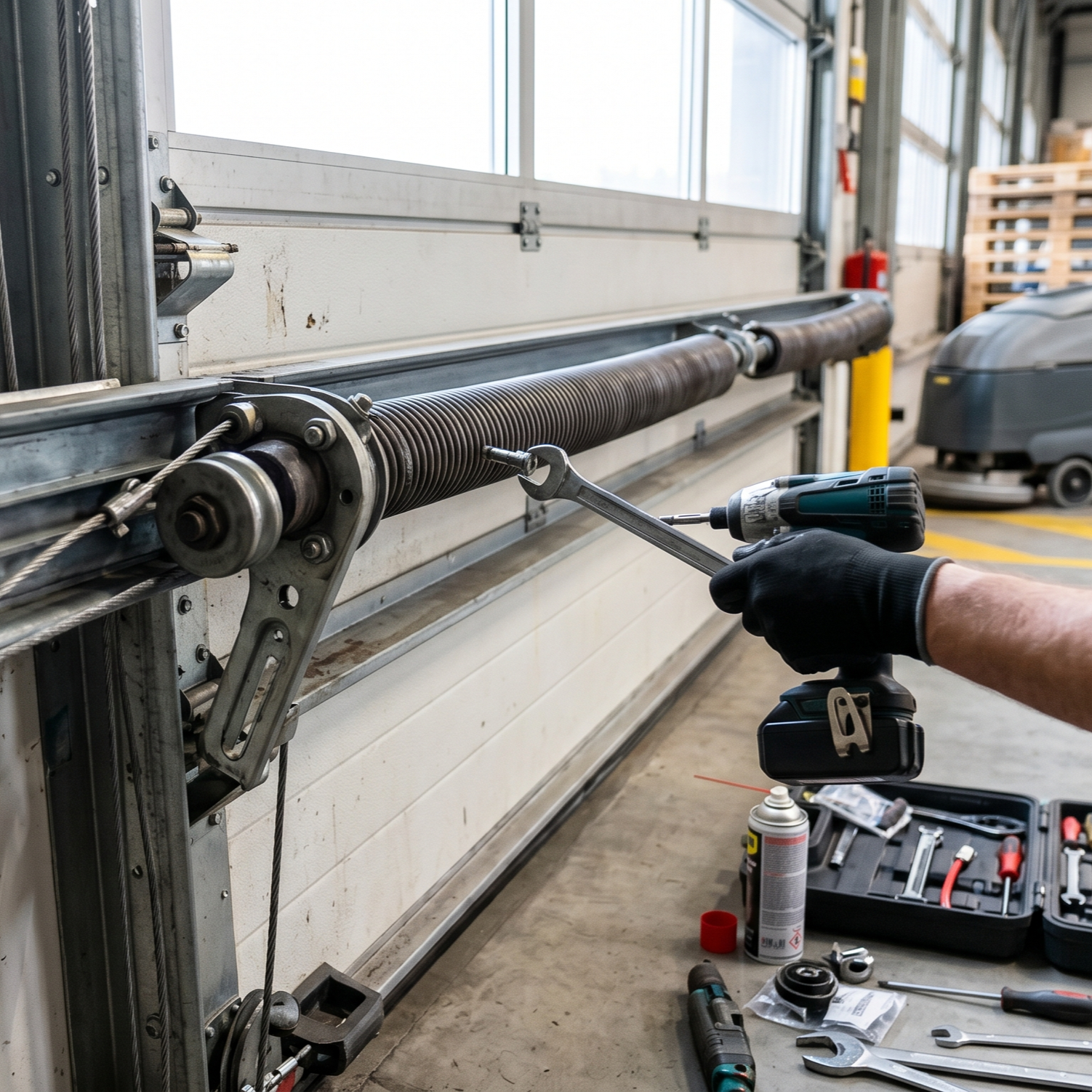
Common situations where repair makes sense include a broken or worn spring, worn rollers or bearings, a faulty opener or motor, damaged weather seals, a single dented or damaged section on a sectional door, or sensor and track issues. These are normal wear-and-tear items, and addressing them returns the door to safe, reliable operation. If the door otherwise cycles well and the repair is a one-off, fixing it is typically the practical and economical choice.
When Replacement Makes More Sense
Replacement moves to the front when the door has reached the point of diminishing returns or can no longer do its job safely. The signals are usually cumulative rather than a single event.
| Factor | Lean toward repair | Lean toward replacement |
|---|---|---|
| Age | Within expected service life | Old, past typical lifespan |
| Failure frequency | Isolated, occasional | Repeated, recurring breakdowns |
| Repair history | First or rare repair | Repairs piling up over time |
| Structural condition | Frame and panels sound | Bent frame, cracked or rusted structure |
| Fit for the operation | Meets cycle and safety needs | Can't keep up or meet safety standards |
| Downtime impact | Minor, infrequent | Frequent failures stopping work |
A door that's old and failing repeatedly, one where repairs are stacking up, one with structural damage like a bent frame or heavy corrosion, or one that simply can't keep up with your cycle volume or meet current safety needs, is telling you it's at the end of its useful life. In a high-traffic operation, a door that fails often also carries a hidden cost: every failure stops loading, idles crews, and can turn trucks away, and at some point, a reliable new door costs less than the accumulated downtime of an unreliable old one.
Weigh the Cost of Downtime, Not Just the Repair
The factor that facilities most often underestimate is downtime. The price of a repair is visible; the cost of the door being down — stalled shipments, idle labor, missed appointments, overtime to catch up — is bigger and easier to ignore until it stacks up. A single hour of a loading dock sitting idle can ripple through an entire day's schedule, pushing back every truck behind the one that's stuck waiting. Those hours rarely show up on a repair invoice, but they show up everywhere else in the operation, from late deliveries to frustrated drivers. A repair that's cheap on paper but is the fourth one this year, each one shutting the dock for hours, may be costing far more than its invoice suggests.
Keep a simple log of each door's failures — date, what broke, and how long the dock was down. When you can see three or four entries in a year on the same door, the repair-or-replace decision usually answers itself, and you have the record to justify it.
That's why the decision is best made with the operation in view, not just the broken part. A door central to a busy dock, failing often, justifies replacement sooner than a lightly used door with the same problem. Matching the decision to how much the door's reliability matters to your business is what turns a reactive patch cycle into a sound long-term call.
Frequently Asked Questions
Age alone isn't the whole answer — it's age combined with failure frequency and condition. A door past its typical service life that's failing repeatedly, needs stacking repairs, or shows structural wear, such as a bent frame or corrosion, is generally past the point of worthwhile repair. If a sound, isolated fix returns an aged-but-intact door to reliable service, repair can still make sense. The pattern of failures matters more than the number of years.
A single repair is almost always cheaper than replacement up front. The real comparison includes the cost of repeated repairs and the downtime each failure causes. When a door fails often, the accumulated repair bills plus lost productivity can exceed the cost of a reliable new door. For an isolated problem on a sound door, repair is the economical choice; for a chronically failing one, replacement often wins over time.
Most wear-and-tear issues are repairable: broken or worn springs, worn rollers and bearings, faulty openers or motors, damaged seals, sensor and track problems, and a single damaged section on a sectional door. These restore a sound door to safe operation. Repair becomes questionable when problems are structural, recurring, or spread across many components at once.
Often, yes. On a sectional commercial door, a damaged panel can frequently be replaced while keeping the rest of the door, provided the model and parts are available, and the rest of the door is sound. This is a common, economical repair after an impact. If multiple sections are damaged or the door is old and parts are scarce, full replacement may be the better route.
Heavily, especially for a busy dock. The cost of a door being out of service — stopped loading, idle crews, delayed trucks — often outweighs the repair invoice, and it repeats with every failure. A door that fails frequently imposes that cost over and over, which can justify replacement even when each individual repair looks affordable. Factoring downtime in is what makes the long-term math clear.
Decide on the Pattern, Not the Panic
Whether to repair or replace a commercial door comes down to four things: its age and condition, how often it's failing, whether it's still safe and able to do the job, and what its downtime costs your operation. Isolated problems on a sound door are worth repairing; an old door failing again and again, with repairs piling up, is asking to be replaced. Look at the trend rather than the latest breakdown, weigh the true cost of the door being down, and the right choice usually becomes clear.
Stuck deciding whether to keep fixing a problem door? — Get an honest commercial door assessment and a repair-or-replace recommendation built around your uptime. Prime Dock & Door LLC serves La Mirada, Anaheim, Santa Ana. Call (714) 683-2201.
