

Dock Leveler Stopped Working? What Causes It
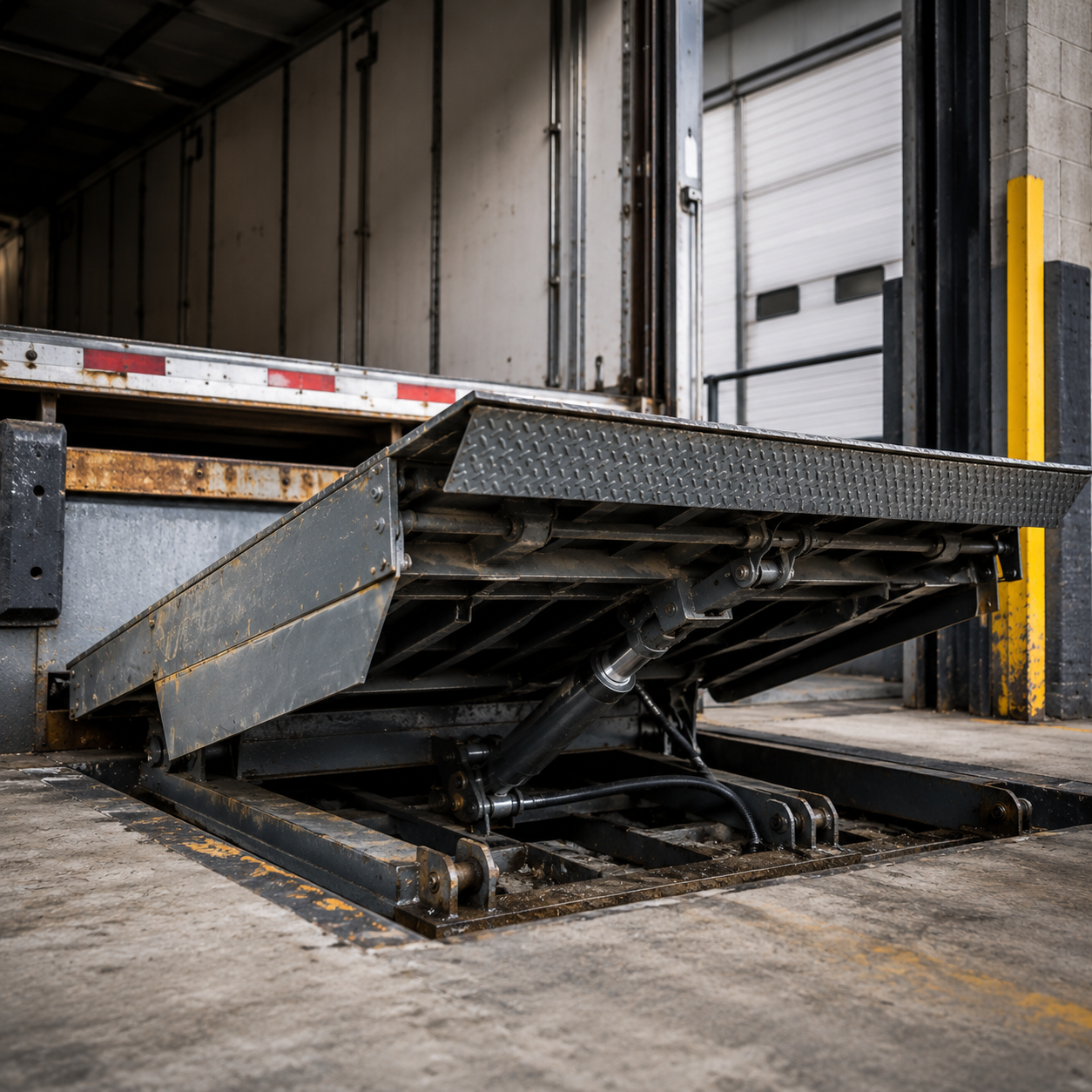
Quick Answer: A dock leveler stops working when one of its core systems fails: a hydraulic leak or pump fault on a hydraulic unit, fatigued or broken springs on a mechanical unit, an electrical problem like a tripped breaker, bad switch, or failed motor, debris and obstructions jamming the mechanism, or worn and corroded parts seizing up. The leveler type determines which is most likely. Pinpointing the failed system — hydraulic, mechanical, electrical, or physical obstruction — is the key to getting it moving again, and some of those repairs involve stored energy best left to a technician.
A dead dock leveler brings everything to a halt — the trailer's there, the forklift's ready, and the bridge between them won't budge. Unlike a part that wears out noisily over weeks, a leveler that stops can feel like it failed out of nowhere. It didn't. Something in one of its systems gave way, and the system depends heavily on the type of leveler you have. Knowing how each one fails turns "it just died" into a solvable diagnosis.
A Leveler Is Several Systems Working Together
A dock leveler isn't a single mechanism — it's a platform driven by a power system, held and positioned by a holding system, controlled by some form of activation, and exposed to a brutal physical environment. When it stops working, one of those layers has failed: the thing that lifts it, the thing that holds it, the thing that tells it to move, or the physical condition of the parts. Identifying which layer failed is the whole game, because a hydraulic leak, a tired spring, a dead switch, and a jammed mechanism look similar from the outside but need completely different fixes.
How Each System Fails
Hydraulic Problems (Hydraulic Levelers)
A hydraulic leveler relies on fluid pressure to raise the deck and extend the lip. The most common failure is a leak — a worn hose, seal, or fitting that lets fluid escape, so the pump can't build the pressure needed to lift. Low fluid, a failing pump, or a stuck valve produce the same result: the leveler moves weakly, drifts down, or won't rise at all. A hydraulic leveler that suddenly won't hold position or won't lift is very often a fluid or pump issue.
Spring Fatigue or Breakage (Mechanical Levelers)
A mechanical leveler uses heavy springs to do the lifting, with the operator releasing it via a chain or hold-down. Over thousands of cycles, those springs fatigue and lose their force, or one breaks outright. When the springs can't lift the deck properly, the leveler becomes hard to raise, won't reach full height, or stops working entirely. These springs store significant energy, which makes them dangerous to service without training.
Electrical Faults (Powered Levelers)
Powered levelers depend on electrical controls — a push-button or switch, relays, and a motor. A tripped breaker, blown fuse, faulty switch, loose wiring, or burned-out motor can all leave the leveler unresponsive. Often, the simplest checks come first here: confirm the unit has power and the breaker hasn't tripped before assuming the worst. If power is present but nothing happens, the fault is deeper in the controls or motor.
Debris, Obstructions, and Ice
Levelers sit in a pit at floor level, which collects everything — pallet fragments, packaging, dirt, and debris that can jam the mechanism or block the deck and lip from moving. Trash under the platform or packed into the pit physically stops travel. Buildup that prevents the lip or deck from folding and seating is a frequent, and frustratingly simple, cause of a leveler that "won't work."
Worn, Bent, or Corroded Components
Time and traffic wear out the moving parts — pivots, hinges, rollers, and linkages — and a seized or broken one stops the leveler. Corrosion accelerates this, and in a coastal environment, salt-laden air attacks dock hardware steadily, weakening and freezing components. A part that's rusted solid or bent from an impact can lock up the whole unit.
| Leveler type | Most likely failure | Telltale sign |
|---|---|---|
| Hydraulic | Fluid leak, pump, or valve fault | Won't lift or hold; weak, drifting motion |
| Mechanical (spring) | Fatigued or broken spring | Hard to raise; won't reach height |
| Powered/electric | Breaker, switch, wiring, or motor | No response; check power first |
| Any type | Debris or ice in the pit | Jams or stops at the same point |
| Any type | Worn, bent, or corroded parts | Binding, seizing, visible damage |
The springs in a mechanical dock leveler and the components in a hydraulic system store significant energy. Don't attempt to service springs, hydraulic lines under pressure, or jammed mechanisms with stored load yourself — a sudden release can cause serious injury. Clearing loose pit debris is safe; internal repairs are for a technician.
Working the Diagnosis Safely
Start with the safe, simple checks that resolve a surprising number of dead-leveler calls. Clear any visible debris from the pit and around the deck and lip. On a powered unit, confirm it has power and check whether a breaker tripped or a fuse blew. Look for obvious problems — a visible hydraulic leak pooling under the unit, a spring that's clearly broken, a part bent from a forklift impact.
Beyond those, the failures enter territory involving stored energy and pressurized systems. Hydraulic leaks and pump faults, spring service, electrical repairs within the controls, and freeing a jammed mechanism under load all require a technician who can do them safely. Because the leveler is essential to keeping the dock running, a leveler that's down after the basic checks is worth a fast professional response rather than improvised fixes that risk injury or further damage.
Frequently Asked Questions
The usual reason is a hydraulic problem — a leak in a hose, seal, or fitting that drops the system pressure, low fluid, a failing pump, or a stuck valve. Without enough pressure, the pump can't raise the deck or extend the lip, so the leveler moves weakly or not at all. A visible fluid leak under the unit is a strong clue. Hydraulic repairs involve pressurized lines, so they're best handled by a technician.
Start with power. Confirm the unit is getting electricity, check whether the breaker has tripped or a fuse has blown, and look for an obvious switch or wiring problem. A surprising number of "dead" powered levelers come down to a tripped breaker or a faulty button. If power is confirmed and it still won't respond, the fault is likely deeper — in the relays, wiring, or motor — and needs professional diagnosis.
Yes, and it's one of the more common causes. The leveler sits in a pit that collects pallet fragments, packaging, dirt, and other debris, and that material can jam the mechanism or block the deck and lip from moving and seating. Clearing loose debris from the pit is a safe first step. If the leveler still won't move after the pit is clear, the problem is mechanical or in one of its systems.
Mechanical levelers use heavy springs to lift the deck, so a fatigued or broken spring leaves the leveler hard or impossible to raise and unable to reach full height. As springs age over many cycles, they gradually lose force before failing outright. Because these springs store significant energy, replacing them is dangerous without proper training and tools, and it should be left to a technician.
It contributes. Salt-laden coastal and marine air corrodes dock hardware over time, attacking pivots, hinges, springs, and fasteners and causing them to weaken or seize. Corrosion-driven wear can lock up components and shorten the life of the whole unit. Facilities in coastal areas benefit from more attentive maintenance to catch rust and corrosion before it stops the leveler.
Diagnose the System, Then Fix It Safely
A dock leveler stops working because one of its systems failed — hydraulics leaking or losing pressure, springs fatigued or broken, electrical controls faulting, debris jamming the pit, or parts worn and corroded. The leveler type points to the likely culprit, and the visible, safe checks — clearing debris, confirming power, spotting leaks or breaks — resolve some of them. The rest involve stored energy and pressurized systems that call for a technician. Diagnosing the failed system is what gets the dock moving again without anyone getting hurt.
Dock leveler dead with a trailer waiting? — Get fast, same-day diagnosis and repair that finds the failed system and restores your dock. Prime Dock & Door LLC serves La Mirada, Anaheim, Santa Ana. Call (714) 683-2201.
