

How to Reduce Energy Loss at Your Loading Docks: A Walk-Through
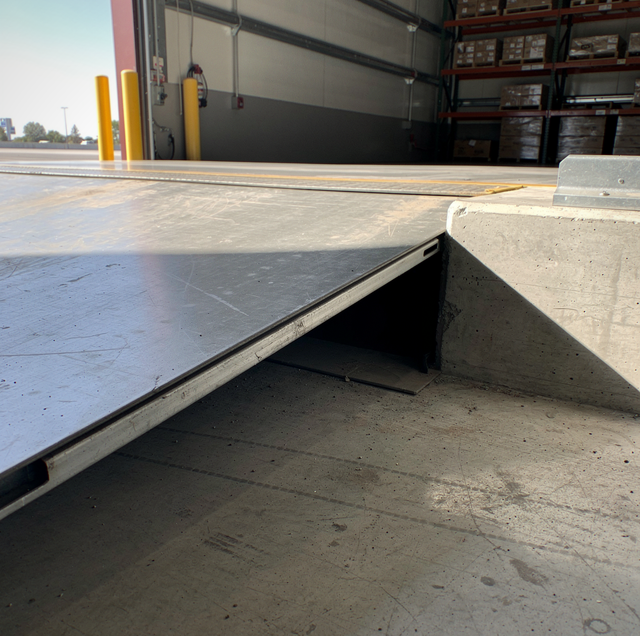
A loading dock is a hole in your building's envelope that opens and closes all day, and its physics don't pause for your convenience. Wherever two surfaces that should seal together leave a gap, air moves from the higher-pressure side to the lower, carrying the temperature you paid to create. That exchange runs both ways, all year, across whichever season you're managing, heating or cooling.
You can't watch conditioned air leave through a wall, but you can trace where it leaves your loading dock: every path shares one shape, a gap where two surfaces were supposed to meet and didn't. Walk your dock point by point, and you'll find the same gaps repeating, each tied to equipment you rely on every shift.
The Leak-Path Map: Where a Loading Dock Actually Loses Air
A loading dock loses conditioned air at predictable points across any commercial facility: a dock combines several pieces of equipment, and each one carries its own gap. Rather than one big hole, a dock leaks through a handful of small, specific openings that add up steadily across a full calendar year of loading shifts, in both directions.
| Leak Path | Where the Gap Actually Sits | What Typically Causes It |
|---|---|---|
| Leveler pit perimeter | Between the deck edge and the concrete pit wall | Clearance the leveler needs to move, on both sides and at the back |
| Leveler deck underside | The steel platform itself, not a gap at all | Bare steel conducting heat with nothing slowing it down |
| Trailer-to-building gap | Where the seal or shelter meets the trailer | A seal or shelter poorly matched to the trailers it actually serves |
| Trailer walk-away gap | Between the trailer bed and the dock face | A trailer creeping away from the bumpers during loading |
| Damaged door and torn jamb seal | The door panel or the frame's side weatherseal | Forklift impact misaligning a panel or tearing the seal loose |
| Door left open | The entire doorway | Long dwell time with no one closing the door between trucks |
Every row on that list maps to a piece of equipment your dock already has, which is useful, because it means the fix for each one is a known job, not a guess made from the yard. The rest of this walks each row in more detail, in the order a walk-through should actually check them.
That list also matters for how it's used. These are gaps and materials common across docks, not measurements taken at any specific building, so the value here is in the map: which piece of equipment to check, and in what order, not a promise about how much any single gap is actually costing a given dock before anyone has looked closely.
What Escapes at the Leveler Pit and the Deck Underside?
A pit-mounted leveler needs room to move, so its manufacturer builds a working clearance around the deck edge on purpose. That same clearance is the first place air moves through: standard, pit-mounted levelers create passageways for air infiltration and escape, because the concrete pit leaves small gaps between the edge of the deck and the pit wall. You won't find that gap by looking at the leveler from the yard; you find it by getting down at floor level and checking the perimeter where the steel meets the concrete.
The underside of the deck is a second leak path on the same piece of equipment, and it isn't a gap at all. A bare steel platform conducts heat efficiently in both directions, pulling warmth out of your building in winter and letting it in during summer, just like an uninsulated steel door. Coating the underside is one known fix for that surface, though it's a step for whoever services your leveler to evaluate, not something to improvise.
Never climb into a leveler pit or reach under a raised deck to check a gap; a dock equipment technician always secures the deck on its lockout strut and confirms the mechanism is de-energized before anyone works there.
Both of these paths sit on the same service call. A technician checking leveler operation is already positioned to check the pit perimeter and the deck underside in the same visit, which is why this pair belongs on a maintenance schedule rather than a separate energy audit.
The Gap an Impact-Damaged Door Leaves Behind
A forklift collision can take out a section of a commercial door outright, or the impact can just misalign the panel enough to leave a gap between it and the frame without stopping the door from closing. Either way, impact damage is a known leak path: it lets outside air in exactly where the door is supposed to seal tightest. Drafty doors and rising energy costs are signs a door needs professional evaluation, not a patch, and a door contractor's evaluation is meant to find gaps like the one a misaligned panel leaves in the frame.
The side weatherseal mounted to the doorframe is the more fragile piece in that same picture. It sits right where a passing forklift is most likely to clip it, and once it's torn loose, the gap it leaves runs the full height of the jamb, not one dented spot.
A sectional or rolling door holds its weight on counterbalance springs and lift cables under real tension, and that tension doesn't go away just because a panel is out of the track. Call a commercial door technician to re-hang or replace the damaged section instead of forcing it back into place yourself; releasing that stored tension in an uncontrolled way turns a door repair into an injury, and it's a handoff, not a step to attempt between trucks.
What Escapes at a Seal or Shelter That Doesn't Fit the Trailer?
The mechanism is simple: a compromised seal can allow heat or cold to escape, reducing the facility's energy efficiency and increasing operational costs. What that sentence doesn't say, and what's easy to miss on a walk-by, is that a seal or shelter can be doing exactly that even when nothing looks broken.
Foam seals, inflatable seals, and rigid or retractable shelters are each built to seal against a specific range of trailer heights and widths. A seal sized for the fleet a facility ran five years ago can leave a visible triangle of daylight at one corner against today's taller trailers, and that gap doesn't announce itself the way a torn curtain does. Professional installation focuses on proper alignment and secure attachment to prevent air and moisture infiltration, which is the part a walk-by inspection can actually check: does the seal or shelter make full, even contact against the trailers backing in that week, not just the one it was measured against originally.
The Trailer That Walks Away From the Dock
A trailer doesn't have to be poorly parked to open a gap at the seal. A trailer can "walk" away from the dock during loading, creating a doorway gap even when it backs in correctly. Repeated forklift impacts inside the trailer, especially heavier ones near the rear axle, push the trailer forward a fraction of an inch at a time until the gap at the seal is wide enough to see daylight through.
A truck restraint is equipment specifically designed to stop that drift, holding the trailer against the bumpers for the duration of the loading cycle without relying on the driver to set the brake and walk away. A restraint that isn't engaging fully, or one set for a different style of rear impact guard than what's backing in, lets the same walk-away gap open even with a restraint installed and switched on. Checking that the restraint is actually engaging, not just present, is the only way to know this leak path is closed.
The Door That's Rarely Fully Closed
In many busy facilities, the dock door is rarely shut, and forklift damage is often why. During a load, the door stays fully open for hours at a time, and the seal around the trailer is all that holds back outside air. Between trucks, with no trailer backed in, every open minute connects the interior and exterior directly, no seal or shelter involved at all.
High-speed doors cut that exposure at the source: the quick opening and closing action limits how much air exchanges between the interior and exterior, maintaining temperature control and reducing the load on heating and cooling systems. A standard door left standing open accomplishes none of that, no matter how well it was installed or how tight its seals are, because none of that hardware is doing its job while the door itself is the opening.
Building a Walk-Through That Starts With the Right Gap
None of these five gaps needs a special tool to find, and none of them needs guesswork about which one matters most. Start at the trailer interface at the seal or shelter, since that gap stays in play through every single load while the dock door is open. From there, check the leveler pit perimeter and deck underside, run a hand along the door frame and jamb weatherseal for damage, confirm the truck restraint is actually engaging, not just present, and time how long the door sits open on a normal load.
A walk-through built in that order checks the gap open on every load before it moves on to the occasional ones, and it turns a vague sense that the dock feels drafty into a specific gap tied to a specific piece of equipment. That's the difference between guessing at energy loss and finding it: knowing which gap a dock walk-through should start with, and checking it first every time.
Frequently Asked Questions
Yes, usually. Your dock packs several moving openings into one footprint: the door frame, leveler pit, and trailer interface. Each is a gap candidate, so your dock loses conditioned air per square foot faster than a solid wall, because you have more places for it to open.
It can. A dock seal's foam pads also close the gaps between the trailer's door hinges. A pad that looks intact can still miss that hinge gap on your trailers, and you only see it once a trailer is backed in and you look along the hinges.
Feel around your pit's perimeter with your hand on a day with a wide temperature difference; a steady draft along the edge where the deck meets the pit wall is the giveaway. You can also watch for frost forming along that edge in cold weather, which tells you conditioned air is meeting outside air right there.
Yes, and the difference scales with how long the door sits open. If your crew treats the door as a wall whenever a trailer isn't at the dock, you cut off that path, which is often the biggest gap on a shift. It costs you nothing but a habit, and it's a leak path only you control without calling anyone.
Not always. A draft at your trailer gap points at the seal or shelter first, but the same symptom shows up when a trailer walks away from the dock and opens a gap at the edge, or when the leveler pit is the source instead. Before you replace anything, watch where your draft starts, because a seal fixed to the wrong path won't stop it.
The lowest panel is hit most often. A standard door's roller guides ride in a sheet metal track that can crumple on impact, leaving the door hard to open and discouraging crews from closing it between deliveries. One bent track can quietly turn a working door into a doorway left standing open all shift. When your technician evaluates the damage, ask whether the track is bent along with the panel, and whether your side weatherseal is still fully attached along your jamb.
Get a dock energy walk-through before winter or summer bills spike — a technician checks the pit perimeter, the door and jamb seal, the seal or shelter fit, the restraint, and dwell time in one visit. Prime Dock & Door LLC serves La Mirada, Anaheim, and Santa Ana. Call (714) 683-2201.
