

Dock Repair Disruption: How to Keep Your Trucks Moving
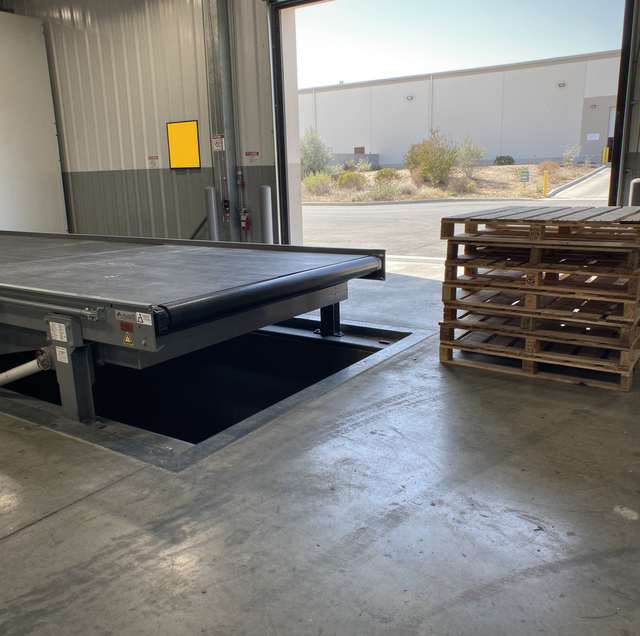
Pull tomorrow's inbound appointments and count how many land before ten in the morning. That is the number a dock repair has to fit around. One of your levelers is out, the deck sitting low with a lip that will not extend, and the carrier who booked that slot three weeks ago knows none of it. You might have six doors, five of which are still working, or one door with none, and those are two different problems arriving at the same hour. A dock repair takes the hours the work takes. What it does to your week depends on where those hours fall relative to everything already booked into that door.
Bay Count and the Appointment Book Come First
Open the receiving schedule before agreeing to anything. The shape of the day matters more than a free afternoon: count the appointments first, then see which hours they stack into, because the count sets the load and the stacking sets the window. If inbound piles into the first four hours, the repair belongs behind it, and only the receiving book records that pattern.
A six-door building turning twelve trailers a day is running two per door. Take one door out and those twelve land on five, which is 2.4 apiece. The down bay's whole share redistributes, and the dock absorbs it as added queue time on the doors that remain. A single-door facility has nothing to redistribute onto, so its window sits outside receiving hours altogether or a load gets held, and that is a conversation with your carriers before it is one with your technician.
Whether a scheduled inspection would have caught this before it caused a truck to stop is its own argument, and it is not this one. The bay is already down. Once you have the window, treat it as fixed, because the rest of the job gets built backward from it.
The Work That Belongs After Hours
The dividing line runs through what each job takes out of service: the approach outside, the opening itself, or power to the leveler. A dock bumper is replaced at the dock face with the door shut, blocking only the approach. Pulling a leveler's deck to reach a cylinder opens the pit and takes your bay out entirely.
Anything reaching into the opening belongs after hours, when the forklifts are parked, and nobody routes a trailer past an open pit. Replacing a door section means the door comes apart from the middle out, so the opening is neither open nor closed while the work runs. A shaft, drum, or torsion spring does the same to the counterbalance.
The rest fits inside a working day. A hydraulic hose, a drifted photo-eye, or a limit switch adjustment takes your bay briefly and hands it back, so you lose one door for part of a shift. What after-hours work needs from you is light: an apron lamp on a photocell goes dark at the wrong end of the job, and a pit is no place to work by headlamp.
What a Bay Can Still Handle Mid-Repair
Ask what the fault took away, because a leveler and a door fail independently and the half still standing gives you something to work with. A leveler with a failed hydraulic cylinder can rise above dock level while refusing to settle below it. Where that is the fault, the bay still serves trailers whose beds sit at or above your dock floor, which turns a stoppage into a sorting problem: high trailers to that door, low ones elsewhere.
A door under repair is less forgiving. Nothing passes through an opening that is half assembled, and a bay whose deck has been pulled is an open hole in your floor that has to be barricaded and written off for the duration. That is where partial use stops and the calendar carries the loss.
Outbound gives you room; the inbound side does not. Pallets can be built, wrapped, and staged inside the building throughout the repair, so downstream work carries on and the queue waiting when the door returns is shorter.
Parts on the Truck Versus Parts Made to Order
A service truck carries what fits more than one machine, so the odds a part is aboard fall as it gets more specific to your unit: hose and fittings almost always, a limit switch or a photo-eye only for the makes that shop sells. A tech who finds one of those has your bay back inside the visit, which is why a dispatcher asks first for a symptom specific enough to guess the part from.
The parts built to your unit are the ones that stretch an outage. A leveler's deck and lip are welded to that unit's size, and a door section is ordered in the door's exact height, gauge, and finish. A section of the wrong gauge weighs differently, and the counterbalance was wound to the door's weight as built, so a substitution changes how the whole door hangs.
Staging closes that gap. A tech who has the model, the serial, and a description of the failure before the visit brings the part along, and your bay comes back in one trip. Without it the first visit is a measurement, the part goes on order, and the bay stays down through a lead time that did not start until the tech left.
The Data Tag on the Door and the Leveler
On a hydraulic leveler, the manufacturer's model and serial decal is on the pit frame, along a side rail or across the front, and the power unit carries its own motor nameplate. On a sectional door, the label sits on the inside face of a section or on an end stile, down where a forklift mast has been rubbing for years. On a rolling steel door, look at the hood or the endplate.
The serial number is the part worth having. A parts desk matches it to your unit's original build record, carrying deck size and lip projection for a leveler, or section height, gauge, and track radius for a door. A torsion spring is called out by wire size and inside diameter first, because those two have to be read off the spring rather than worked out from the door.
Grease covers a pit decal, and a scraped label is why the picture is worth taking early. Photograph the door label from the warehouse floor on a quiet afternoon and keep it where whoever makes the call can reach it. The leveler's decal sits in a pit that is no place to climb while the deck is live, so that one gets read on a service visit.
Frequently Asked Questions
Yes, though your security system has to be part of the plan. An exterior dock door stands open for part of the work, and on a monitored system that opening is a supervised zone, so ask your monitoring company what a scheduled open-door window needs from them and from you. Skip that call and the crew arrives at a door they cannot open without waking a dispatcher at two in the morning.
The approach behind the bay, and only the approach. A raised deck swings back over your floor, and a pallet stack there stops the job before it starts. Leave the pit alone. Shrink wrap, banding, broken pallet boards, and standing water collect under a leveler deck, and clearing them means going under a raised deck, which is technician work with the deck supported and the power off. Say what is down there when you book, so that hour sits inside the window you booked.
By moving the loads that can move. A drop-and-hook load can be spotted in the yard and worked after the bay is back, while a live unload holds the driver at your door and cannot be time-shifted. Sort the day's inbound into those two piles and hand your carriers the result; they need that split before they can re-time anything. A liftgate delivery worked at ground level is the other route, needing a pallet jack and a clear path in.
One person with the authority to release the bay and the keys to reach the disconnect for the leveler's power unit. That single role is the one that goes missing when a repair crosses a shift change: the supervisor who agreed the scope leaves at eleven, and the tech spends twenty minutes finding somebody who can approve a change. Name that person when you book, and name their relief if your window crosses a handover.
In front of the bay, on the same apron a trailer would use. A dock repair works off the truck: the deck plate, the cylinder, the section or the spring all come from it, and pit work adds a torch, a welder and a compressor at the dock face. Hold one approach lane clear when you set your window, or the crew starts the visit waiting for a trailer to be pulled off the door.
Two closes, not one, and they happen at different moments. The technician's close is the equipment: the position gets run through a full cycle with somebody watching rather than one push of the button, and what is finished gets separated out loud from what is still deferred to a second visit. Yours is the schedule. A bay that is mechanically fine but still blocked in your appointment system goes on costing you the outage after the repair has ended.
Scheduling a dock repair around your receiving hours — which hours the bay can actually be down gets agreed before anything is ordered, because the parts order and the crew's shift both follow from that window. Prime Dock & Door LLC serves La Mirada, Anaheim, and Santa Ana. Call (714) 683-2201.
