

Loading Dock Equipment Replacement: Signs to Watch
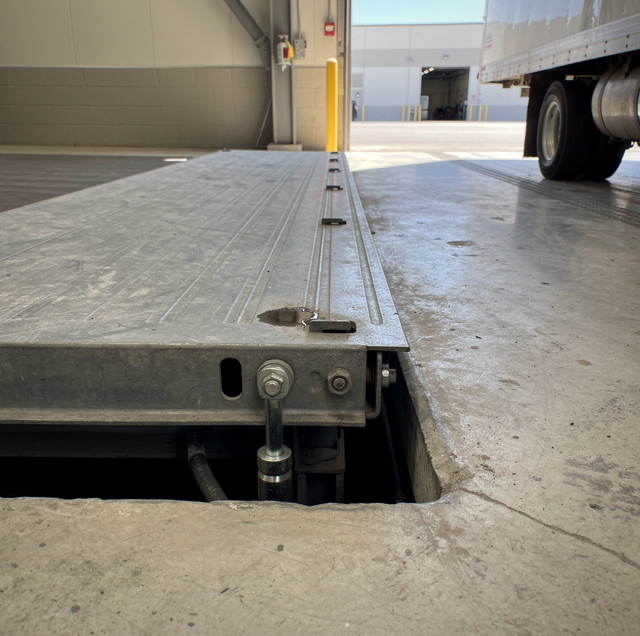
Myth: dock equipment should remain in service until it completely fails. Facility teams operating on tight budgets often treat a working leveler, bumper, or seal as one that doesn't need attention yet, reasoning that as long as trucks are still loading, the equipment is still doing its job. That reasoning misses what actually happens in the months before a full failure. Dock equipment doesn't go from fine to broken overnight; it degrades through a sequence of smaller failures, each one a little more disruptive and a little more likely to cascade into the next, until a leveler that's been "fine" for years suddenly strands a truck at the dock during a shift with no warning.
Why Running Equipment To Full Failure Costs More Than It Looks Like
A dock leveler or door that fails mid-shift doesn't just need a repair; it takes the bay out of service at the worst possible moment, often forcing trucks to be rerouted to other docks or held until the repair crew arrives. Repeated emergency repairs on equipment past its practical service life also tend to compound: fixing a worn hinge on a leveler that also has a cracked deck plate and a leaking cylinder means the technician is patching one symptom while two others keep working against the fix, so the same equipment ends up calling for another service visit within weeks rather than months. None of this shows up as a single dramatic number on paper; it shows up as more frequent disruption, more overtime coordinating around an unusable bay, and a slower loading process across the whole facility while one bay operates at reduced capacity or not at all.
Structural Signs In The Leveler Deck And Frame
A dock leveler's deck plate takes direct impact from forklift traffic dozens of times a shift, and metal fatigue in that plate shows up as visible flexing under load, hairline cracks near the hinge points, or a deck that no longer sits flush with the truck bed even when properly adjusted. Once cracking starts at a stress point, it propagates faster under continued loading rather than staying stable, which is why a leveler that "still works" with a visible crack is closer to a sudden structural failure than the crack's small size suggests. Rust-through in the pit structure beneath the leveler is a separate, often hidden problem, since standing water and salt residue in an unsealed pit corrode the support structure from below, out of sight during a routine walk-through inspection.
Recurring Hydraulic Or Mechanical Failures
A leveler that needs a cylinder reseal or a hydraulic line repair is a routine maintenance item. A leveler needing the same repair, or a different hydraulic failure, several times within a single season is telling a different story: something in the system- worn seals throughout, a pump nearing the end of its service life, contamination in the hydraulic fluid- is degrading faster than individual part replacement can keep up with. At that point, each repair is buying a shorter interval before the next failure, and the practical service life of the unit as a whole, not just the part that most recently failed, is the actual issue.
Gaps Between The Deck And The Truck Bed
A dock leveler's lip is designed to bridge the gap between the dock and the trailer bed with a tight, stable connection. Worn hinge pins, a bent lip, or a leveler that's lost its designed range of motion create a gap or an unstable bridge that forklift traffic has to cross repeatedly. That gap is a safety issue in its own right, not just a performance one, since a wheel dropping into an uneven gap under load can tip a loaded pallet or cause a forklift operator to lose control momentarily. A leveler that requires constant manual adjustment or shimming to keep the lip seated properly has moved past routine wear and into a range where the fix is masking a problem rather than solving it.
Bumpers And Seals Beyond Their Working Range
Dock bumpers are designed to compress under trailer impact and return to their working thickness between hits; a bumper that's permanently compressed, cracked through, or missing chunks no longer absorbs impact as it's supposed to, which instead transfers that impact directly into the building structure and the trailer itself. Seals and shelters work on a similar principle: a torn or collapsed seal stops blocking out weather and pests at the dock opening, leading to drafts, debris, and pest entry that weren't a problem when the seal was intact. Both of these components have a finite compression life, measured in thousands of cycles, and once that life is spent, patching a torn seal or shimming a flattened bumper only delays a failure that has already effectively occurred.
Obsolete Parts And Vanishing Support
Equipment old enough that the manufacturer has discontinued specific components puts a facility in a position where even a routine repair can turn into an extended wait while a compatible part is sourced or fabricated. This is a quieter version of the same underlying issue: the equipment has aged past the point where keeping it running is a simple parts-and-labor question, and every future repair carries a growing risk of an extended, unplanned outage simply because the part needed isn't readily available anymore.
Safety Ratings And Load Capacity Drift
Dock levelers carry a rated load capacity set by the manufacturer, and that rating assumes the deck, hinges, and lip are all performing to their original specification. As those components wear, actual load capacity can drift below the rated figure well before any single part fails outright, since a worn hinge pin or a deck that's lost some of its original stiffness reduces the margin the equipment was designed with. This drift is invisible during normal operation because the leveler still moves and still holds a forklift, right up until a heavier-than-usual load or an off-center pallet finds the reduced margin the wear has created. Periodic load testing, rather than relying on the leveler simply "feeling fine" under everyday use, is the only reliable way to confirm that the rated capacity is still intact, not just assumed.
How Truck Restraints And Wheel Chocks Fit Into The Same Pattern
Truck restraints, the mechanical hooks or wheel-based systems that keep a trailer from separating from the dock during loading, wear through a similar sequence as levelers: a hook mechanism that used to engage cleanly starts needing extra force, a wheel-style restraint's arm loses spring tension and doesn't seat as firmly against the tire. Because a restraint failure only becomes obvious at the exact moment a trailer starts to pull away during loading, a restraint showing early signs of sluggish engagement deserves the same seriousness as a leveler with a cracking deck, even though the restraint itself looks like a much simpler mechanism.
Repair-Signal vs Replace-Signal Comparison
| Sign | Repair Signal | Replace Signal |
|---|---|---|
| Deck plate condition | Minor surface wear, flat and stable | Visible cracking, flexing, or persistent misalignment |
| Hydraulic system | One isolated leak or seal failure | Repeated failures across a single season |
| Lip and hinge fit | Occasional adjustment holds | Constant shimming needed to keep the lip seated |
| Bumper condition | Some compression, still rebounds | Permanently flattened, cracked through, or missing sections |
| Seal/shelter condition | Small tear, still blocks most weather/pests | Collapsed or torn through, drafts and debris passing freely |
| Parts availability | Common parts, quick turnaround | Discontinued components, long sourcing delays |
| Pit/frame structure | Surface rust only | Rust-through or structural corrosion in the pit |
Reading The Pattern, Not Just The Latest Failure
The mistake most facilities make isn't ignoring dock equipment; it's evaluating each failure in isolation rather than tracking patterns over a season or a year. A single hydraulic leak is a repair. Three different failures within twelve months on the same unit is a service-life question, and answering it honestly, rather than defaulting to "it's still running" every time, is what keeps a facility ahead of an unplanned outage rather than reacting to one.
Frequently Asked Questions
The count alone isn't as telling as what's actually failing. Three repair calls that all trace back to the same worn part, a seal that keeps needing replacement, say, usually just means that one component needs a proper fix rather than the whole unit. Three repair calls that hit different systems in the same year- a hydraulic leak, then a hinge, then a cracked weld- point to wear spread across the whole leveler rather than one bad part, and that's the pattern experienced technicians treat as the stronger signal for a full replacement evaluation.
In many cases, yes, through pit resurfacing or partial frame replacement, but the practicality depends on how far the corrosion has spread; a pit with isolated surface rust is a manageable repair on its own, while one with structural section loss usually calls for the leveler to come out for the frame work to be done properly.
Yes; hydraulic units tend to show failure through leaks, cylinder wear, and pump issues, while mechanical levelers more often show wear in the release mechanism and the walk-down spring assembly, so the specific signs to watch for differ depending on which type is installed.
A passed load test confirms current load capacity at that moment, but surface rust on structural components is worth tracking over time regardless, since corrosion that hasn't yet reduced load capacity can progress to the point where it does between testing intervals.
Bumpers mounted where trailers most commonly make contact first, often slightly favoring the driver's side depending on how trucks typically approach the dock, tend to compress and crack sooner than bumpers on the opposite side, which is why inspecting both sides individually catches uneven wear that a quick glance at the dock can miss.
Facilities running multiple shifts put several times the cycle count through the same equipment in a given month compared with a single-shift operation, compressing the same wear pattern into a shorter calendar timeline, even though the underlying failure sequence is the same.
Dock equipment gives clear signals before it fails outright: cracking before collapse, recurring leaks before a full hydraulic failure, a lip that needs constant adjustment before it fails to seat at all. Reading those signals as a pattern, rather than treating each one as an isolated inconvenience, is what separates a facility that replaces equipment on its own schedule from one that finds out its dock is down when a truck is already backed up to it.
Get a straight assessment of your dock equipment's condition — Repair or replacement guidance from a commercial specialist- before a bay goes down mid-shift. Prime Dock & Door LLC serves La Mirada, Anaheim, and Santa Ana. Call (714) 683-2201.
