

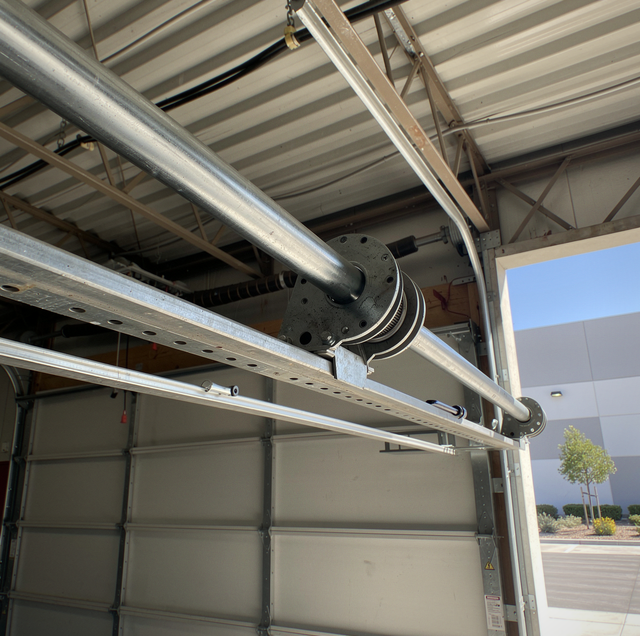
Every commercial door ships with a duty expectation built into it. The counterbalance is specified for a range of open-and-close cycles; the hardware set is sized on the same assumption; and the operator is matched to a projected daily workload. Two very different things can go wrong from there. Something in the door can be defective, giving out well before it should. Or nothing can be wrong with the door at all except the arithmetic: put an assembly built for moderate traffic on a shipping opening that runs several times that volume, and it reaches the end of its design life in a fraction of the calendar time anyone planned for, which the facility experiences as a door that failed early.
From the floor, the two are hard to tell apart, and they call for different responses. A defect needs correcting. A duty rating that sits under the real workload requires the service interval, and sometimes the hardware specification, to be moved up to match. Whatever hangs in the opening, cycle count is what sets the wear clock.
Quick Answer: Premature wear on a high-cycle commercial door usually traces to a duty rating set below actual use. The counterbalance, bearings, rollers, track, and operator each spend their working life in cycles rather than in months.
The Counterbalance Spring and Its Cycle Rating
A torsion spring's working life is quoted in cycles, and the standard tiers a spring is sold in count openings, never months. Each pass winds the wire up and lets it back down, leaving a trace of fatigue in the steel, and enough of them take away the spring's ability to hold rated torque. Two identical springs, one on a rarely used side opening and one on the main shipping bay, arrive at that point on wildly different dates.
A spring gives up force gradually, and every bit of torque it stops providing is handed to the hardware underneath it: the operator pulls a heavier door, the drums and bearings carry more load per turn, and the track sees a door that no longer floats through its travel. A counterbalance drifting out of specification quickly stops being a spring problem and starts wearing out the parts around it.
Spring and counterbalance assemblies hold enough stored energy to injure or kill, and no one on the facility side should be adjusting, releasing, or working near a wound spring. Tracking how hard the opening is worked is what tells you when the counterbalance needs trained eyes on it.
Bearings, Shafts, and Drums Under Constant Rotation
Above the door, the torsion shaft turns in end bearings and, on wider openings, a center bearing plate. Each cycle is one loaded rotation in each direction, so bearing wear tracks cycle count almost directly. As the grease film thins and the race wears, the shaft picks up play and stops running true.
The cable drums ride on that shaft, so when it wanders in a worn bearing, the two ends of the door stop rising and landing in step. One side leads slightly; the door runs with a twist, and that twist loads the rollers on one side harder on every pass.
Sound is the early tell. A dry bearing chirps at the top of travel, then grinds, then gets loud enough that people stop hearing it as unusual. On a busy opening, the gap between that first chirp and real shaft damage is short, because the door may run more cycles in a month than a quiet door runs in a year.
The people who work under a door hear a change before anyone measures one. A new rattle, a chirp on the way up, or a heavier landing is worth writing down and reporting the same day.
Hinges, Rollers, and Track: Small Errors Repeated
Rollers carry the door's weight into the track through a stem seated in a hinge barrel, and hinges pivot at every section joint. All of it moves twice per cycle, under load, in both directions.
Roller bearings wear first on most high-cycle doors. Once the bearing drags, the roller stops rolling and starts to skid, scrubbing a polished wear line into the track flange and pushing side load back into the hinge. The stem then wears the hinge barrel oval, the section joint loses alignment, and the fastener holes elongate from repeated shoving. Track gauge belongs in the same picture: track specified for moderate service flexes under load, and that flex lets rollers bind at the curve.
Alignment error is where cycle count does its quietest damage. A track slightly out of plumb, a jamb bracket a fraction off, a hinge shimmed unevenly at install: each forces a roller against one flange on every pass. On an opening that runs occasionally, an error that small hides for years. Put it on an opening that cycles all shift, and it gets loaded over and over within months, surfacing as a groove in the track, a roller running hot, or a section that no longer seats square. Corrosion runs alongside all of it on openings that breathe salt air, stiffening roller bearings and pitting track flanges while the mechanical loading does its own work, so a coastal facility pays two wear bills on the same hardware.
The Operator and Drive Train Under Repeated Reversals
Operators are specified by duty class, a statement about how many starts per hour the motor and gear reduction were built to absorb. Every start draws inrush current and generates heat in the windings, and every stop is absorbed by the brake. Starts per hour, rather than hours of runtime, fills that budget.
Reversals hit the drive train hardest. When a door starts down, stops partway, and returns to open, the drive train accelerates the door's mass from rest twice inside what the facility counts as one trip, with no benefit of momentum. Mid-travel stops do the same in miniature: the brake sets on a moving load and glazes a little more each time, and the motor restarts against a door no longer coasting.
Heat turns that into wear. A drive running near its starts-per-hour limit never cools between cycles, and sustained heat breaks down winding insulation and thins the gear oil. Chain drives stretch and develop slack, letting the chain climb the sprocket and round the teeth off. An operator working above its duty class rarely announces it. It runs hotter, comes off the mark more slowly, carries more slack every month, and keeps working until one of those quiet changes finishes it off. The count of starts is what spends it, and that count answers to the shift schedule.
The Human-Factor Pattern That Shortens Everything
What outruns all of those mechanical wear paths is how the door gets treated during a busy shift.
Impact: Forklift contact with a bottom section or a track ages a door faster than anything else here. A dented bottom bar changes how the door seats, a bent track guides rollers into a path they were never meant to follow, and every cycle after drags a distorted assembly through hardware aligned for a straight one.
Holding the door open on the wall button: Parking a door part way up on constant pressure keeps the load on the operator and the brake, and the habit comes with repeated jogging while a driver lines up. Those jogs are cycles, and nobody counts them.
Safety devices out of service: Photo-eyes knocked out of alignment by a pallet, or taped over because they nuisance-trip, do the most damage here. A misaligned eye reverses the door on nothing, and every false reversal is charged to the drive train. Covering, unplugging, or jumpering a photo-eye or safety edge is never a workaround; a device that will not hold its alignment is reporting that something in the opening is moving.
A door that binds, shudders, or hesitates in mid-travel should be taken out of service until a technician has inspected it, rather than running through the rest of the shift and leaving it to fail with a load underneath it.
The fix sits with the people running the opening; once they know a strike, a jog, or a taped sensor moves the door's wear clock forward.
Building Movement and Floor Slope Take a Door out of Square
A door can go out of square without anyone touching it. Slabs settle, tilt-up panels and steel columns move slightly with age, and approach aprons take pounding from trailer traffic until they crack at the edge. The track is anchored to that structure, so when the structure moves, the geometry the door was aligned to moves with it.
Floor slope does the same at the bottom of travel. Dock and warehouse floors are often pitched for drainage, so a door closing onto one lands on a corner first. The rest of the bottom bar arrives a moment later, twisting the section on every close and wearing the seal unevenly. Daylight at one corner of a closed door that used to sit flat is the opening telling you it has moved.
Out-of-square geometry raises friction everywhere at once: rollers ride harder against one flange, hinges take side load they were never aligned for, and the operator draws more. A high-cycle opening applies that friction on every trip, all day, which is how a building settlement problem surfaces first as door hardware wear.
Reading Early Wear as a Duty Report
Line the wear paths up next to each other, and they share one property: each spends itself per cycle. The counterbalance loses torque per wind, the bearings wear with each rotation, a misaligned roller scrubs the track on every pass, and the operator's duty class is reduced by starts. None of them keeps time by the month.
That is what makes early wear on a hard-worked opening worth reading closely. A door coming apart faster than its neighbors is often assembled and aligned correctly, and simply carrying more work than its specification anticipated. That is a report about duty, a different finding from a defect and one that points to a different fix. The same reading applies when the operation changes around a door that has not changed at all: a shift added, a lane rerouted around a project, an occasional side exit promoted to the primary receiving opening. The hardware is unchanged, and the work has grown.
Sorting the two apart is site work. It looks at which parts have worn and in what pattern, against an honest account of how hard the opening runs, and that comparison says whether the door needs correcting or the specification does.
Frequently Asked Questions
Many commercial operators keep a running cycle count on the logic board, and a technician can read it during a service visit; some hold a separate resettable count for cycles since the last maintenance. Where no counter exists, a clipboard tally kept at the opening for one ordinary week gives a workable planning number.
It collects a different kind of trouble. Grease in bearings and roller assemblies stiffens and migrates off the contact surfaces when nothing is turning, and rollers left resting in one position under load can take a flat spot. The first cycles after a long quiet stretch are the roughest a lightly used door runs.
Section weight sets the load that each hinge, roller, and bearing carries per cycle, so an insulated sandwich-panel door reaches a given wear point sooner than a light single-skin door on the same schedule. Hardware is specified by weight class and opening size, which matters most when sections are replaced with a heavier product than the original hardware.
Removing the electric operator takes one wear path away and adds another. The counterbalance still spends a cycle every time the door goes up and comes back down, and a chain hoist brings wear points at the sprocket, the chain keeper, and the guide. Hand-chain doors also get run fast by people in a hurry.
Often. The first sign is sometimes a motor thermal overload that trips partway through a busy run of cycles, or a drive that stops on overcurrent and comes back once it has cooled. Read either as a mechanical symptom before an electrical one, since a drive train fighting friction pulls more current to move the same door. Contactor chatter belongs to the control circuit: unstable coil voltage, a loose control wire, worn contacts, or a failing control power supply.
The published rating belongs to the counterbalance, and the rest of the door keeps its own clocks. Rollers, hinges, track, bearings, and the operator each reach their limits at points that rarely line up with the spring's, so a door can pass its counterbalance rating with track hardware that still has life in it.
Find out whether a door that is wearing early has a defect behind it or a duty mismatch — a commercial dock and door specialist can inspect the opening and weigh what has worn against how hard the door is actually run. Prime Dock & Door LLC serves La Mirada, Anaheim, and Santa Ana. Call (714) 683-2201.
