

Dock Seal vs Dock Shelter: Which One Fits Your Dock
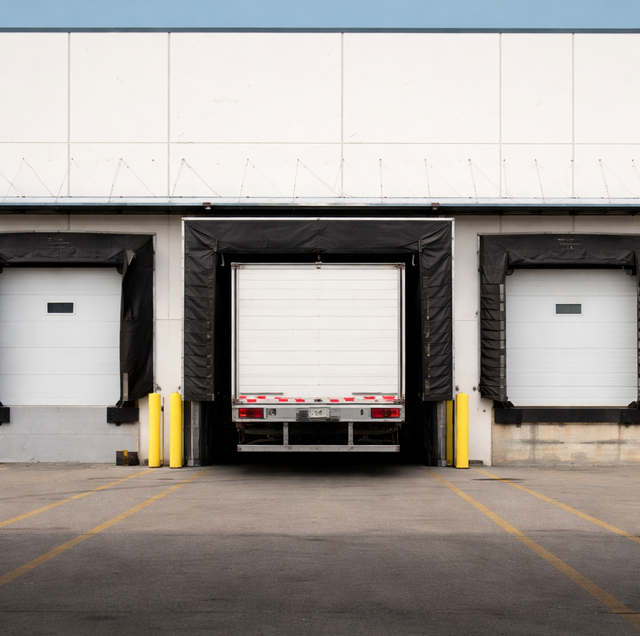
Quick Answer: A dock seal uses compressible foam pads the trailer presses into for the tightest weather and pest barrier, best when your trailers are a uniform size. A dock shelter uses a fabric hood with side and head curtains the trailer backs under, giving full-height door access and room for mixed or oversized fleets. Seals trade flexibility for a tighter close; shelters trade some tightness for versatility.
A truck backs into an open dock position and, for a few minutes or a few hours, there is a gap between the back of the trailer and the face of your building. That gap is where conditioned air escapes, where rain and wind push in, and where birds and insects find a way inside. Both a dock seal and a dock shelter exist to close that gap, but they do it in ways that suit very different docks. Choosing the wrong one costs you in wear, energy, or missed loads, so the decision is worth getting right before a purchase order goes out.
What a Dock Seal Actually Is
A dock seal is built from foam pads covered in a tough fabric, usually a vinyl or a hypalon-coated material chosen to shrug off abrasion. Two vertical pads run up the sides of the door opening and one horizontal pad, the head pad, runs across the top. The trailer backs squarely into the pads and compresses them, and that compression is what forms the barrier. Because the trailer is physically pushing into the foam, the contact is firm and continuous along the sides.
Where the seal earns its keep
The pressed-foam design gives the tightest close of any dock barrier, which is why seals are the default where energy control and pest exclusion matter most and where the trailer fleet is consistent. A facility that receives the same class of dry van day after day gets a clean, repeatable compression every time. The tradeoff is built into the geometry: the pads sit inside the width and height of the opening, so a seal is sized to a fairly narrow range of trailer dimensions. A trailer that is too tall or too wide will not fit into the compression zone properly, and the head pad reduces how much of the top of the door opening stays clear.
What a Dock Shelter Actually Is
A dock shelter takes the opposite approach. Instead of pads the trailer presses into, it uses a framed hood, often steel or aluminum with a fabric or translucent top, that projects out from the wall. Beneath and beside that hood hang side curtains and a head curtain, and the trailer backs under and against them. The curtains drape along the trailer rather than being crushed by it, so the contact is lighter and more forgiving.
Where the shelter earns its keep
Because nothing is being compressed to a fixed dimension, a shelter accommodates a much wider spread of trailer sizes. A dock that sees box trucks one hour and high-cube reefers the next benefits from that tolerance. Shelters also preserve full-height access to the door opening, since the curtains move aside rather than blocking the top few inches the way a head pad does. The tradeoff is that a draped curtain does not close as tightly as pressed foam, so on a per-position basis a shelter is a slightly looser barrier against wind-driven rain and small pests.
Head Curtains and the Top of the Opening
The top of the door opening is where the two designs differ most, and it is worth a close look because it drives real decisions. On a seal, the head pad is a fixed foam block, so trailers of different heights all press against the same block. A shorter trailer leaves a wedge of open gap above it; a taller trailer may not clear the pad at all. Many seals answer part of this with an adjustable head pad or a head curtain that drops down onto the trailer roof once it is parked, closing the variable gap that trailer height creates.
Shelters lean on the head curtain as a core feature rather than an add-on. Because the trailer backs under the hood, the head curtain can hang and conform to whatever roof height shows up, which is the main reason mixed-fleet docks reach for shelters. If your incoming heights vary by more than a few inches, the head-of-opening seal is usually the deciding factor.
Matching the Barrier to Your Traffic and Climate
The right choice comes down to three questions about your operation: how uniform your trailers are, how tightly you need to control the interior, and how hard the dock gets used.
Uniform trailers, strict climate control
A single trailer size and a strict interior target, such as a cold-storage or food operation holding temperature, points toward a seal for its tighter close, or toward a rigid-frame shelter engineered for a tight fit. Refrigerated and food facilities often want the best barrier they can get against warm outside air and against pests near stored product, so this pairing matters.
Mixed fleet, high or variable trailers
Varied trailer widths and heights, or frequent oversized loads, point toward a shelter for its tolerance and full-height access. A shelter is far more comfortable with a trailer that shows up an inch wider than expected, where a seal would fight it.
Heavy, high-cycle dock traffic
A high-volume dock takes abuse, and seals absorb impact directly through the foam every time a trailer lands. That contact is exactly why the pads wear. A shelter's curtains flex out of the way, so a busy dock with a range of drivers and trailers often lands on a shelter, or on a hybrid, to spread the wear.
Comparing a seal and a shelter is like choosing between a fitted lid and a draped cloth over a bowl: the fitted lid seals tightest but only fits one bowl, while the cloth covers many bowls at the cost of a looser edge. Your fleet decides which one your dock is really holding.
When a Hybrid or Rigid-Frame Shelter Fits
The two categories are not a hard either-or. A hybrid combines foam side pads with a shelter-style head curtain, so you get much of a seal's side tightness while keeping flexible coverage at the top for varied trailer heights. Docks with consistent widths but inconsistent heights are natural candidates.
A rigid-frame shelter uses a stiffer structure with side members that stay closer to the trailer, tightening the close while keeping a shelter's size tolerance and full-height access. It sits between a standard fabric shelter and a seal on both tightness and flexibility, and it stands up well to weather exposure and steady use. If you want a shelter's versatility but need it to perform closer to a seal in wind and temperature control, this is the middle path.
Wear, Replaceable Parts, and Knowing When to Act
Neither barrier lasts forever, and both are built so worn parts can be swapped without replacing the whole unit. On a seal, the wear items are the fabric-covered foam pads, especially the corners and lower faces that take the most trailer contact; the covers can be re-skinned or the pads replaced. Wear guides, or pleated wear pads, along the front faces are sacrificial strips meant to be renewed. On a shelter, the side and head curtains, the sacrificial corner sections, and the fabric hood are the replaceable pieces, while the frame typically outlives several sets of curtains.
The choice tends to track the dock's traffic: a seal suits a matched fleet where every trailer lands in the same size window, while a shelter earns its place on a mixed or high-traffic dock by fitting more of what arrives and wearing more gracefully as trailers of different heights back in. Weigh each option against the wear pattern your dock actually produces rather than a single spec on paper.
Worn barriers are also a safety matter, not just an efficiency one. A torn or sagging seal or shelter that hangs into the door's path can foul the door's travel or block a driver's or operator's sightline, and a flap of loose fabric can catch on a trailer or the leveler. Damaged foam or fabric should be replaced before it interferes with the door or the dock, not after. A dock barrier is only one part of safe loading; a properly equipped position also needs a truck restraint or wheel chocks to hold the trailer and a dock leveler to bridge the gap, and installation or replacement of any of these is commercial-dock work for a trained crew, not a quick in-house fix.
A torn or sagging seal or shelter that hangs into the door's path can foul the door's travel or block a driver's or operator's sightline, and a flap of loose fabric can catch on a trailer or the leveler. A properly equipped position also needs a truck restraint or wheel chocks to hold the trailer.
Frequently Asked Questions
Service life depends far more on cycles than on calendar age. A moderate-traffic dock may run a set of seal pads or shelter curtains for several years, while a high-cycle position that lands dozens of trailers a day can wear the front faces or sacrificial guides in a fraction of that time. The frame of a rigid or standard shelter usually outlasts several curtain sets, so replacement is often a curtain-and-corner job rather than a full unit swap.
Yes, both are commonly retrofitted, but the wall face has to be sound enough to carry the mounting load and the door opening dimensions have to match the trailer range. A shelter's projecting hood needs adequate clearance above and around the opening, so a position with an obstruction close to the header may favor a seal or a low-profile shelter. A site assessment before ordering avoids a unit that does not fit the building.
They do, as one layer of it. By closing the perimeter gap around a parked trailer, both cut the open pathway birds, rodents, and insects use, and a tighter seal generally excludes small pests better than a draped curtain. Neither replaces door sweeps, a well-adjusted leveler with gap protection, or a broader pest program, but at the trailer interface a barrier in good repair removes an easy entry point that an open gap leaves wide.
No, a dock bumper is a separate component, usually a laminated rubber or molded block bolted to the dock face below the door. Its job is to absorb the impact of the trailer landing and protect the building and the leveler, not to close the weather gap. Bumpers and barriers work together: on a seal dock especially, correctly sized bumpers set how far the trailer stops from the wall, which controls how much the foam pads compress.
Temperature-controlled docks usually want the tightest close available, which points toward a seal for a uniform fleet or a rigid-frame shelter for a varied one. The goal is to limit the exchange of warm outside air and moisture at the gap, and a compressed-foam seal or a snug rigid frame does that better than a loose fabric curtain. Some cold operations also add an interior strip-curtain or an air barrier behind the dock door as a second stage.
In effect, yes, through a hybrid unit that pairs foam side pads with a shelter head curtain, which is the usual way to combine their strengths on one position. Running a full separate seal and a full separate shelter on the same opening is uncommon and generally unnecessary, because the hybrid already delivers side tightness plus flexible top coverage. The more useful pairing is a barrier with the rest of the dock package: restraint, bumpers, and leveler.
Not sure which barrier your dock needs — get a straight recommendation matched to your trailers and traffic. Prime Dock and Door serves La Mirada, Anaheim, and Orange County. Call (714) 683-2201.
