

High-Speed vs. Standard Roll-Up Doors: 5 Deciding Factors
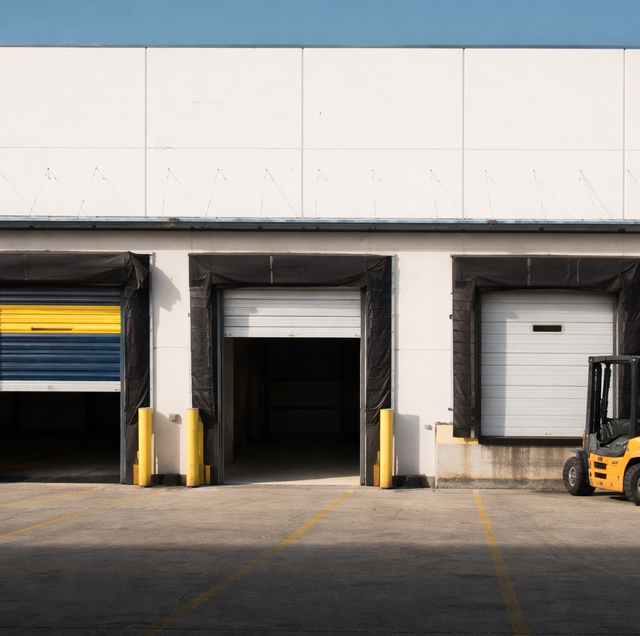
Two doorways in the same building can call for two completely different doors. The dock opening that faces the yard takes weather, break-in risk, and forklift hits, so it wants steel. The interior opening between your cooler and your pick line cycles hundreds of times a shift and bleeds cold air every second it sits open, so it wants speed. Choosing between a high-speed door and a standard commercial door starts with knowing what each one is actually built to do.
Quick Answer: Standard commercial doors (rolling steel or sectional) are slower, tougher, and more secure, which suits exterior and perimeter openings. High-speed doors (fabric or rubber panels that travel several feet per second) cut air exchange and move traffic through busy interior openings faster. Most facilities end up with both: steel on the outside, high-speed inside.
What a High-Speed Door Is
A high-speed door uses a flexible curtain, usually a coated fabric or a heavier rubber panel, that rolls up into a compact coil or folds fast rather than lifting rigid sections on a track. The defining trait is travel speed. Where a standard door might open at roughly a foot per second, a high-speed unit can move several feet per second, so a doorway that a forklift approaches is open by the time the operator reaches it and closed a few seconds later after they pass.
Many high-speed models are self-repairing. If a forklift or pallet clips the curtain, the panel pops out of its side guides instead of tearing or bending, then reseats itself on the next cycle or when the operator resets it. A rigid door in the same collision usually means a bent section, a jumped track, or a service call.
The trade for that speed and forgiveness is material. A fabric curtain does not resist a determined intruder or a windstorm the way a steel slat does, and the drive systems carry more electronics: variable-frequency controls, sensors, and encoders that count position. More moving intelligence means more parts that eventually need attention.
What a Standard Commercial Door Is
Standard commercial doors come in two common builds. A rolling steel door is a curtain of interlocking steel slats that coils above the opening, the workhorse of exterior warehouse and dock walls. A sectional door is a set of rigid horizontal panels, often insulated, that rides up and back on tracks along the ceiling. Both open more slowly, and both are built around durability rather than cycle speed.
Their strength is exactly that toughness. Steel resists forced entry, shrugs off wind-driven rain, and takes weather and minor impacts that would shred a fabric panel. Insulated sectional panels add a thermal barrier for conditioned space. Because the design is mechanically simpler than a high-speed drive, the up-front investment is lower, and a broad pool of technicians can service it.
The cost of that ruggedness is time and air. A slow cycle means the opening stands wide longer, so more outside air trades with inside air on every pass. On a doorway that opens a few dozen times a day, nobody notices. On one that cycles constantly, that slow travel becomes daily wear on springs, cables, and rollers, plus a steady energy penalty.
The Real Differences That Drive the Decision
The two door types are not competitors so much as tools for different jobs. Lining up their strengths against the demands of a specific opening is how the choice gets made.
Where high-speed doors earn their place
- Cycle-heavy openings: A door that runs continuously through a shift benefits most from fast travel and self-repairing curtains, because the speed compounds across hundreds of cycles and a curtain that reseats after a bump avoids constant downtime.
- Temperature separation: Between a cold-storage room and a staging area, or any two zones held at different temperatures, the seconds an opening stays shut matter. Faster cycles mean less exchanged air and a smaller load on refrigeration and HVAC.
- Interior throughput: At a busy internal doorway, a door that clears the opening before the forklift arrives keeps traffic flowing instead of stacking operators up waiting on a slow lift.
Where standard steel and sectional doors earn theirs
- Exterior perimeter and security: On any opening to the outside, steel is the answer. It resists break-in and stands up to weather in a way fabric cannot.
- Impact and abuse tolerance: A rugged steel door takes knocks, weather cycling, and rough handling over a long service life.
- Lower up-front investment: Where an opening does not cycle often, the simpler mechanics and wider service availability of a standard door make it the practical pick.
Five Factors to Weigh Before You Choose
Run each candidate opening through the same short list, and the answer usually reveals itself.
1. How many cycles a day: Count roughly how often the door opens. A high-cycle opening, one running through most of the shift, points toward a high-speed door built for that pace. A door that opens a handful of times a day rarely justifies the added cost and electronics.
2. Interior or exterior: An opening to the outside carries security and weather duty that fabric is not meant to hold, so it leans steel. An interior opening between conditioned or working zones is where high-speed shines.
3. Temperature or air separation: If two sides of the opening are held at different temperatures, or you are trying to keep dust, fumes, or climate-controlled air from migrating, fast cycles limit the exchange far better than a slow door.
4. Forklift traffic and impact risk: Heavy forklift traffic argues for a self-repairing high-speed curtain on interior runs, and for impact protection on any door. A door on a forklift-traffic opening needs bollards or guard posts so a wayward lift hits the barrier, not the door or its tracks.
5. Energy goals: If lowering the load on heating and cooling is a priority, the faster a busy door closes, the less conditioned air escapes, which is why high-speed units so often land on interior and cold-storage openings.
Why a Hybrid Layout Usually Wins
Framing this as one door type for the whole building is the wrong question for most facilities.
Match each opening to its job: rolling steel or insulated sectional doors on the exterior perimeter for security and weather, and high-speed fabric doors on the busy interior and cold-storage openings where speed and air control pay off.
A common warehouse layout has steel dock doors facing the yard and high-speed doors dividing the cold room from the pick floor. The steel handles the outside world; the high-speed doors handle the internal tempo. Neither could do the other's job well, and trying to force one type onto every opening either overpays for speed you do not need or gives up speed and energy savings where they would have mattered most.
Whichever mix you land on, treat the safety systems as non-negotiable. High-cycle doors need scheduled maintenance to stay safe, because the same speed that makes them useful wears parts faster. Installation and service on either door type is commercial-door pro work, both for the door to run right and for the safety devices to be set correctly.
Any powered commercial door is a crushing and impact hazard. Photo-eyes, safety edges, and reversing devices that stop and reverse the door when something is in the path are required, and none of them should ever be bypassed to keep a door running.
Frequently Asked Questions
A high-speed door commonly travels around several feet per second, while a typical rolling steel or sectional door moves closer to a foot per second. On a cold-storage opening, that difference can mean the door is shut in two or three seconds rather than twenty, which is where most of the air-exchange savings come from.
Some high-speed doors use a dual-skin or heavier rubber curtain designed for freezer and cooler openings, and cold-room versions often add heated side guides so the tracks do not ice up and jam. This is different from the thermal mass of an insulated sectional panel, so the right freezer-rated model matters when the opening separates a real temperature gap.
At minimum, photo-eyes across the opening, a safety edge or sensing bottom bar, and an auto-reverse function that stops and backs the door off when it meets an obstruction. On high-speed units, a light curtain (a grid of beams rather than a single eye) is common because the fast travel leaves less margin for error. None of these should be disabled to keep production moving.
They tend to need maintenance on a tighter schedule because of the cycle count and the drive electronics: the variable-frequency controller, position encoder, and curtain condition all get checked. A steel door on a low-cycle opening may go longer between visits, but a high-cycle steel door still wears springs and cables and should be inspected on a set interval too.
Bollards are steel posts, usually filled with concrete and anchored to the floor, set just ahead of the door jambs and tracks. A drifting forklift strikes the post and stops before it reaches the door, sparing the curtain, guides, and opener. On heavy-traffic interior runs, guard rails along the approach do the same job for the wall and door frame.
The curtain is designed to release from its side guides on impact instead of tearing or bending, so the panel deflects out of the way. On the next open-close cycle, or after an operator hits reset, the curtain reseats itself in the guides and keeps running. A rigid steel or sectional door taking the same hit usually bends a panel or jumps its track and needs a service call before it works again.
Book a facility door walk-through — get the right door on every opening so each one is fast, secure, and safe. Prime Dock and Door serves La Mirada, Anaheim, and Orange County. Call (714) 683-2201.
