

Why Dock Bumpers Matter More Than You Think
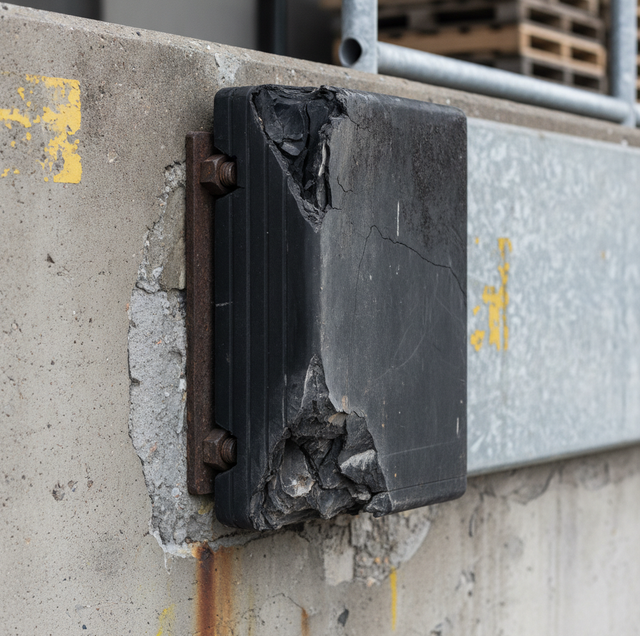
Walk your loading dock, and you will pass the bumpers a dozen times without a second look. They sit low on the dock face, scuffed and quiet, doing nothing visible while trucks come and go. That is exactly why they get ignored until something they were supposed to protect finally breaks. The bumper is the cheapest part of the whole dock system, and it is the one standing between a 40,000-pound trailer and everything behind it.
Quick Answer: Dock bumpers are the rubber or laminated pads bolted to the dock face that absorb the impact of a trailer backing in. They cushion repeated hits so shock never reaches the concrete, the leveler, and the door; they set the trailer's stopping distance so the leveler lip can seat correctly; and they keep the trailer from riding up over the dock. When they wear out, the trailer hits bare concrete, the leveler and door take damage they were never built for, and the gap between bed and dock stops lining up, which is a fall hazard.
What A Dock Bumper Actually Does
A trailer does not glide gently into a dock. It backs in under power, and even a careful driver lands a hard, dull impact against the building several times a day. Multiply that by every truck that visits, and the dock face is absorbing thousands of collisions a year. The bumper is the part that takes those hits, so nothing else has to.
Think of it the way a car's crumple zone works. The bumper is engineered to deform on impact and give the energy somewhere to go, so the force never reaches the rigid structure behind it. On a loading dock, the rigid structures are the concrete dock face, the building wall, the dock leveler, the overhead door, and its track. Without the bumper in the way, every one of those takes the blow directly.
The second job is less obvious but just as important: the bumper sets where the trailer stops. Its projection off the wall establishes the gap between the trailer bed and the dock edge. That gap has to stay within a narrow window so the dock leveler's lip can extend and rest on the trailer bed with enough overlap to carry a loaded forklift. A correct bumper holds the trailer at the right distance every time.
Third, the bumper keeps the trailer where it belongs. It stops a trailer from riding up and over the dock edge, and it prevents a trailer from crushing the leveler when the driver misjudges the approach. The bumper is a physical stop, not just a cushion.
What Goes Wrong When Bumpers Wear Out Or Go Missing
Rubber does not last forever. Every impact compresses it, and over enough cycles it loses thickness, cracks, and eventually tears away in chunks. Once the bumper is too thin or gone, the protection it provided disappears all at once, and the damage starts stacking up.
First, the trailer begins contacting bare concrete. Concrete has no give, so the repeated impact cracks and spalls the dock face, breaking off pieces and exposing the rebar underneath. That damage does not repair itself, and it spreads.
Second, the shock that the bumper used to absorb now travels straight into the equipment. The dock leveler is taking impact loads it was never designed to handle. The overhead door and its track get hit and knocked out of alignment. The building wall itself absorbs force it was not built to carry. These are expensive assemblies absorbing abuse meant for a low-cost pad.
Third, and most dangerous, the trailer stops in the wrong place. A worn or missing bumper lets the trailer park too close or too far from the dock. When the gap is wrong, the leveler lip cannot seat on the trailer bed with a safe overlap. That opens a gap a forklift wheel can drop into, and a loaded lift going into that gap is a serious injury event, not a minor mishap. This is the reason worn bumpers are a safety issue and not just a maintenance line item.
Fourth, everything wears faster. Levelers, dock seals, and the door all cycle under more stress and shock than they were rated for, so their service life shortens across the board. A neglected bumper quietly ages out the equipment around it.
The Main Types Of Dock Bumpers
Not every dock wears bumpers at the same rate, and the right bumper depends on how hard the dock works.
Molded rubber bumpers are the common baseline. They are cut or molded from solid rubber, mount cleanly, and give consistent, predictable performance for docks with moderate traffic. They are a clean, uniform starting point for most facilities.
Laminated bumpers are built from stacked layers of tire tread compressed together on a steel backing. That layered construction takes higher repeated impact than a molded pad and holds up on busy docks where trucks cycle in and out all day. If your dock runs heavy volume, laminated bumpers are usually the more durable choice.
Steel-faced and high-impact bumpers add a steel face or a more aggressive design for the toughest, highest-cycle operations, where trailers hit hard and often. These handle punishment that would chew through a standard rubber pad in short order.
Whatever the material, sizing, and projection have to match the dock. The bumper's projection off the wall has to account for the height variation between the different trailer beds that visit, plus the trailers' actual dimensions. A bumper that is too short or set too far in lets trailers reach past it to the wall or the leveler; one sized correctly holds every trailer at the right stopping point.
How To Spot A Bumper That Needs Replacing
Bumpers fail slowly and quietly, so you have to look for them going bad rather than wait for a truck to tell you. On a walk on the dock, watch for a few clear signals.
The rubber is compressed thin, cracked across the face, or chunked and torn where pieces have broken off. Bolts or the steel backing plate are showing through where the rubber used to cover them. Fresh concrete damage is appearing on the dock face around or behind the bumper, which means impact is already getting through. And the bumper simply no longer projects far enough off the wall to hold the trailer at the correct distance.
Any one of those means the bumper is past its useful life. The mistake facilities make is waiting until the bumper is entirely gone before acting. By then, the concrete and equipment have already been taking hits for weeks or months, and the repair bill is no longer just a bumper.
In a coastal or salt-air location, add one more thing to the inspection: the mounting hardware. Salt-laden marine air corrodes the bolts and steel backing that hold the bumper on the dock face. A bumper can look serviceable while the hardware securing it quietly rusts, so a bumper that is loose or shifting deserves attention even if the rubber still looks intact.
Keeping Bumpers Ahead Of Failure
The whole point of a bumper is to be replaced on your schedule instead of on the trailer's. That means a few simple habits.
Inspect bumpers on a regular preventive schedule, right alongside the leveler, the seals, and the door, since they share the same abuse, and it makes sense to check them together. Run those inspections more often on high-cycle docks, because wear tracks directly with the number of trailers and the aggressiveness of the impacts. A dock that turns dozens of trucks a day wears bumpers far faster than one that sees a handful.
Replace bumpers before they are gone, not after. A worn-but-present bumper still gives you a window to swap it during planned downtime; a missing one has already started the damage clock on the concrete and equipment.
Match the replacement to the dock. When bumpers wear out, that is the moment to confirm the projection and type still fit your actual trailer mix and cycle volume, especially if your traffic has changed. Air-ride trailers and the height variation between different rigs change how the trailer meets the bumper, and high cycle counts drive faster wear, so the bumper that was right five years ago may not be the right one now.
One caution: bumper replacement is a professional job, not a quick fix to hand off casually. The hardware has to be sound, the projection has to be correct, and the mounting has to hold up under repeated heavy impact. Because a wrong bumper reintroduces the same fall and stopping-distance hazards it is supposed to prevent, it is worth having the work done by someone who services docks for a living.
The Small Part That Protects Everything
Dock bumpers earn their keep precisely because they are unremarkable. They sit there taking hits, so your concrete, your leveler, your door, and the people working the dock never have to. A worn bumper is not a cosmetic problem; it is the first domino, and the ones behind it are far more expensive and, when a forklift is involved, far more dangerous. Give the bumpers the same attention you give the equipment they protect, and the whole dock system lasts longer and stays safer.
Frequently Asked Questions
Give yourself a measurable threshold. Many molded bumpers start around 4 inches thick, so replace once the pad has worn down to roughly half that, or the moment any steel backing plate or mounting bolt becomes visible. Fresh cracks in the concrete behind the bumper are the other trigger, since they mean impact is already reaching the dock face. Measuring the remaining thickness beats guessing, and it lets you swap the bumper on a planned schedule instead of after the damage starts.
Think of it in cost order. The bumper is the cheap sacrificial part, so letting it fail transfers the impact to the far costlier dock leveler and the overhead door track, both of which run into real money to repair or replace. It also exposes rebar in the spalled concrete face once the surface breaks away. A pad that costs a small fraction of the leveler is the thing standing between the trailer and everything expensive behind it, which is why replacing it early is the cheapest move on the dock.
Each fits a different job. Laminated stacked tire-tread absorbs high cycle counts and soaks up the horizontal float of air-ride trailers that rise and settle as they load. Molded rubber is cleaner and will not streak a trailer or the wall, which suits docks where appearance and moderate traffic matter more than raw endurance. A steel-faced bumper adds a rub plate for the heaviest, highest-cycle use, where a plain rubber pad would chew through fast. Match the choice to your traffic volume and trailer type rather than defaulting to one.
The leveler lip needs a minimum overlap onto the trailer bed, typically a few inches, to carry a loaded forklift safely across. Worn bumpers let the trailer stop too close or too far, so the lip loses that purchase. When the trailer sits too far in, the lip cannot reach; too far out, and it can drop into the gap instead of resting on the bed. Either way, a forklift wheel meeting that gap is a serious fall event, which is the reason worn bumpers are rated as a safety problem and not a cosmetic one.
Projection has to cover the height differences among the various trailer beds that visit your dock, plus a wear allowance, so the bumper still holds trailers properly as it ages. Get it wrong, and trailers reach past a too-short bumper to hit the wall or the leveler directly. Because air-ride trailers and mixed trailer heights change how the rig meets the dock, confirm the projection against your actual trailer mix rather than reusing an old spec.
Put bumpers on a regular preventive schedule alongside the leveler, seals, and door, since they take the same abuse and are easy to check at the same time. Inspect them more often on high-cycle docks, where wear tracks directly with the number of trucks and the force of each impact. Frequent checks matter because bumpers degrade gradually and fail quietly, giving no warning if nobody is looking for the early signs.
Schedule a dock bumper inspection — protect your leveler, door, and dock crew before wear turns into damage. Prime Dock & Door LLC serves La Mirada, Anaheim, and Santa Ana. Call (714) 683-2201.
